
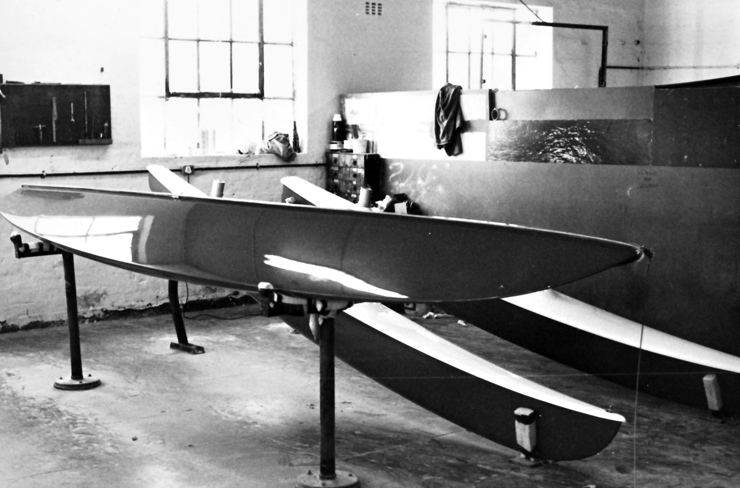
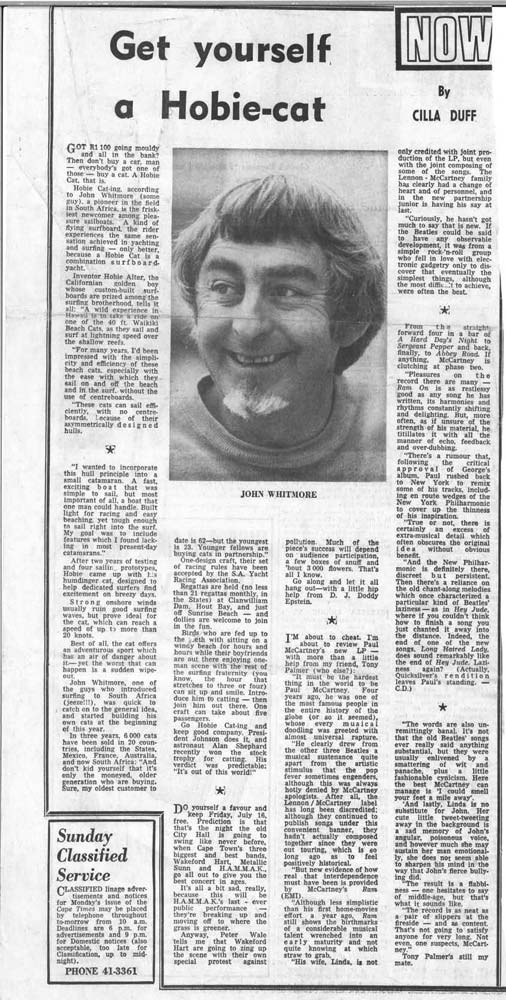
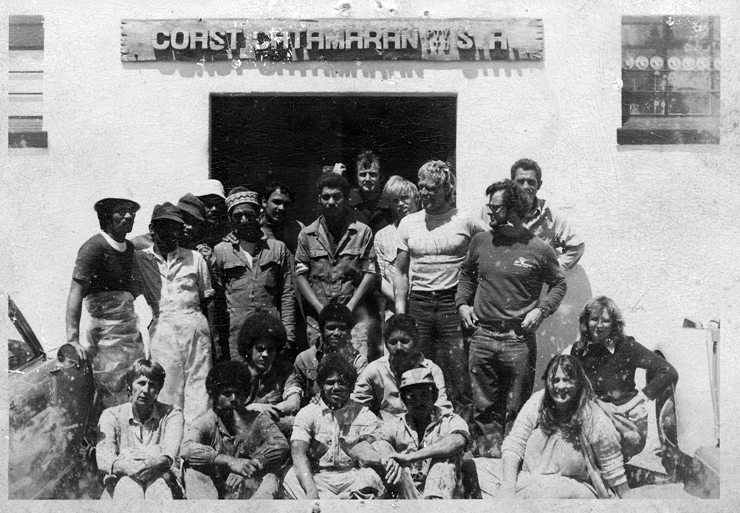
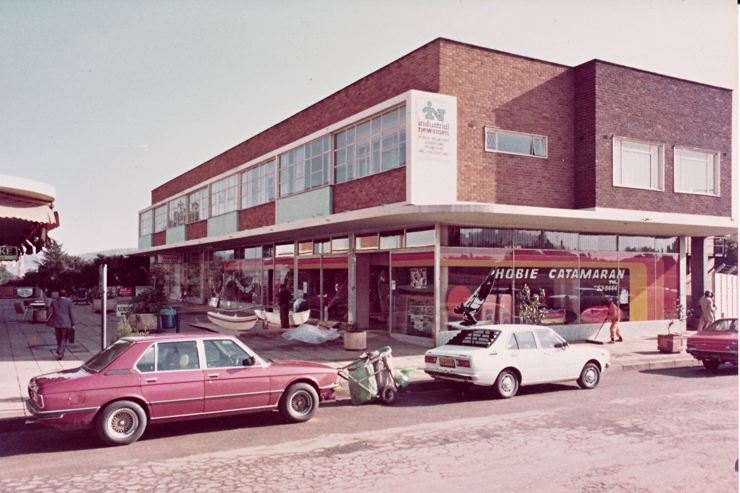
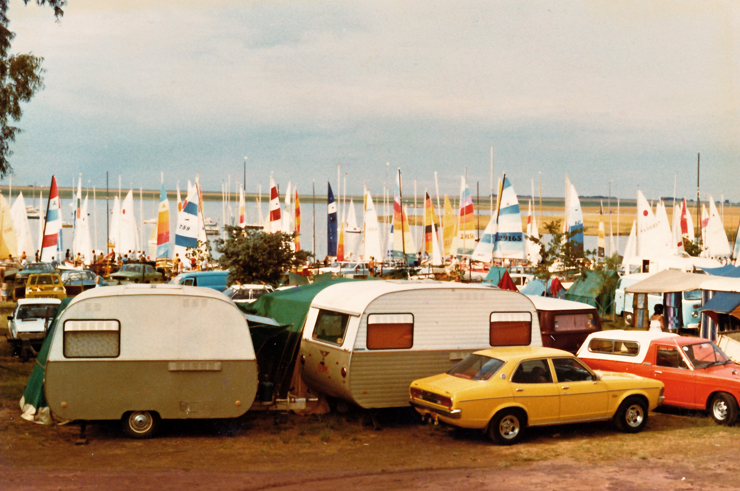
Much has been said and written about John Whitmore’s influence on South African surfing. But far less is known among the broader public about John’s influence on South African Hobie Catting. Along with his trusted lieutenants in his Cape Town Coast Catamaran factory and the racing administrative scene, John both made the boats and built the sport up to the point where there were thousands of these twin-hulled boats sailing on the beaches, dams and lakes of the country by the mid-70s.
While there were certainly other catamarans in South Africa beforehand, John single-handedly introduced Hobie Cats to the country in the early 1970s. By forming the Hobie Cat racing class, John challenged the hegemony of the snooty monohull yachting establishment. He and his team were behind a push in the sport that ultimately resulted in thousands of racing regattas and scores of regional and national championships and a vibrant national recreational Hobie Catting community.

By the late 1970s Hobie Catting was firmly established in South Africa, as evidenced by this article on surfing Hobies in Natal in the official American Hobie Cat magazine, The Hobie Hot Line.
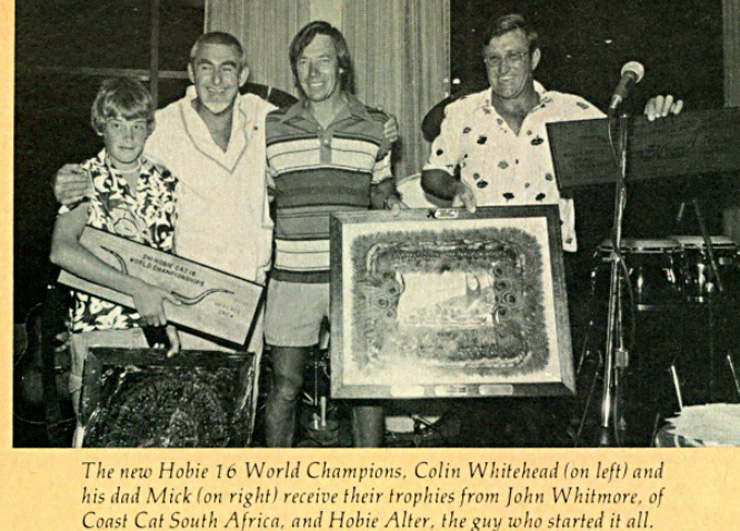
South African Hobie Cat contingents also attended and placed highly in many international Hobie Cat world championship events, which ultimately resulted in South Africa’s first ever world champions in any sailing class, Mick and Colin Whitehead, who won the Hobie 16 Worlds in Texas in 1978.
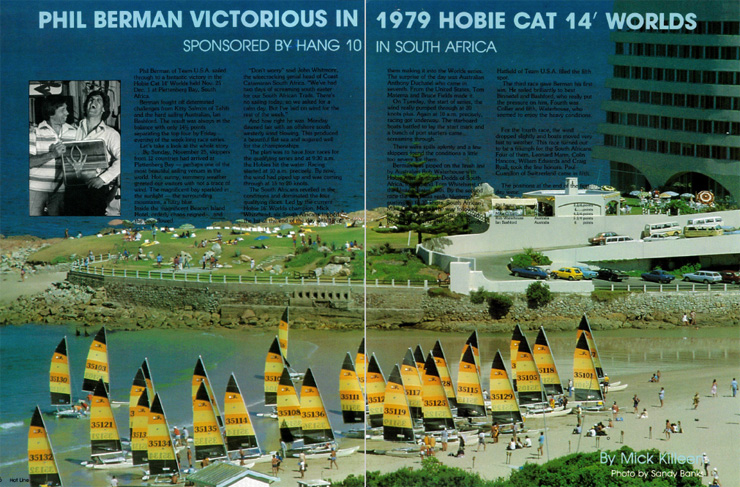
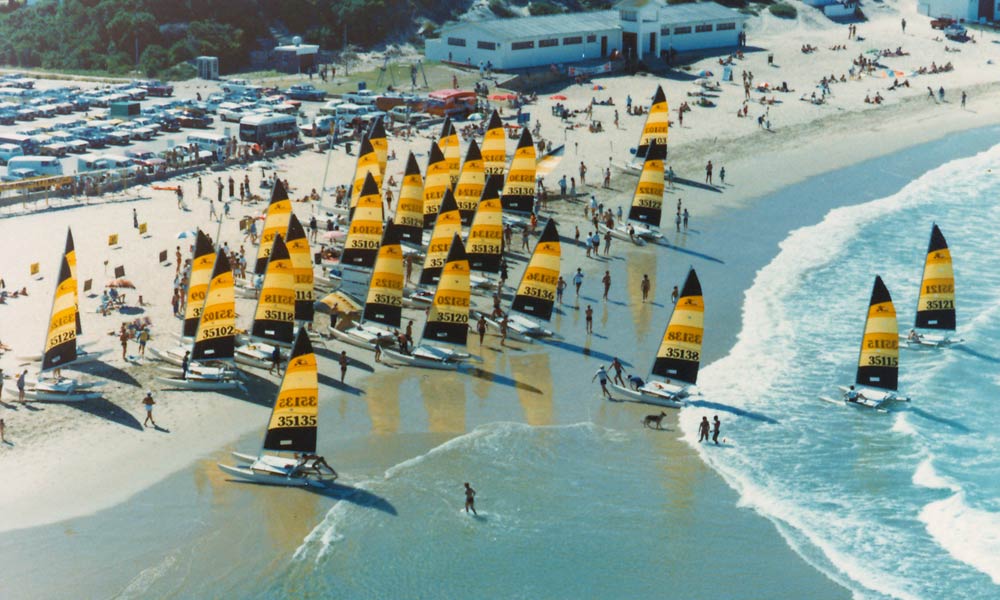
John was also instrumental in South Africa hosting three Hobie Cat world championships between 1979 and 1991. The efforts of John and his support staff made many of the country’s sailors world title holders across the three main Hobie Classes of the day – Hobie 14s, 16s and 18s.
To this day, including the later Turbo, Tiger and Dragoon classes, South Africa still boasts the most podium finishes and world champions out of any Hobie sailing nation, a remarkable achievement.

John and his South African Hobie Class Association employees regularly published their own magazine to keep local Hobie Catters abreast of SA and international Hobie Cat news.
The South African Hobie Cat explosion (and that is really what it was, a total phenomenon) continued in the late 70s and 80s – when it unfortunately fell prey to anti-apartheid sports boycotts before recovering slightly when South Africa was transformed in 1994. But the country’s commanding presence continued even into the 90s, before the Hobie Cats experienced a sharp decline in popularity worldwide, one that not so coincidentally coincided with John’s full retirement and departure from active involvement in the sport.

Nevertheless, though the sport is now much smaller than it was in its 70s and 80s heyday, South Africans continue to dominate world Hobie Catting racing, continuing a wonderful legacy – one started in the country by John Whitmore more than five decades ago.
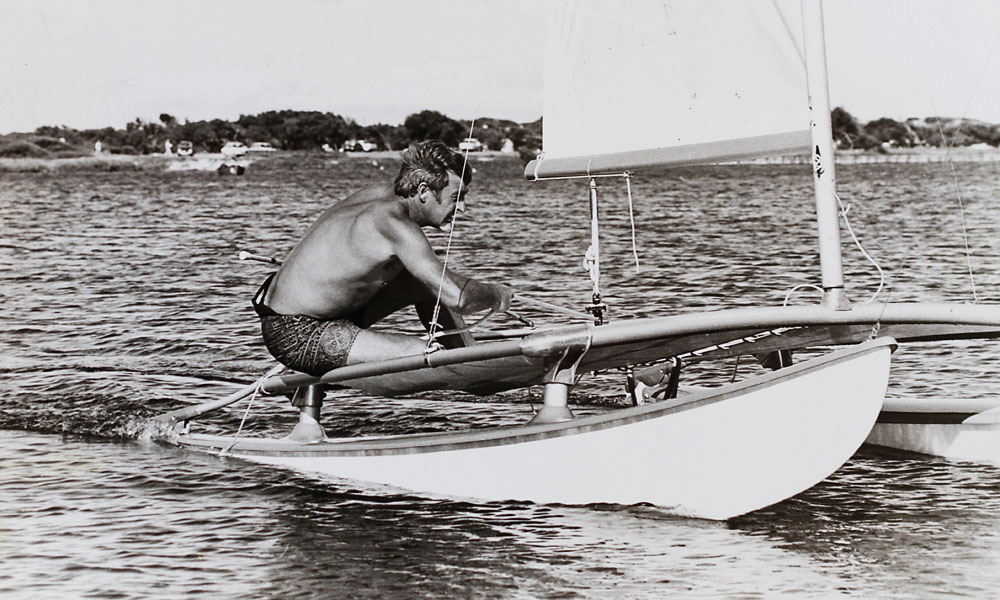
Never an avid regatta entrant, John nonetheless loved to sail his own modified Hobie Cats. Image Whitmore Family Collection.
Dubbed both ‘Mr Hobie Cat’ and the ‘Hobie Cat King’ in South Africa, John’s impact on the success of this sailing discipline arguably outstrips even his influence on surfing in the country. The entire early history of the sport is covered in detail in the book ‘The Oom – The Biography of South African Water Sports Pioneer John Whitmore’.
By Miles Masterson
Get a copy of ‘The Oom’

‘The Oom – The Biography of South African Water Sports Pioneer John Whitmore’ is the illustrated life story of a man who made a massive impact on several ocean-based water sports in the country from the 1950s to the 1980s.
Buy a numbered copy, signed by the author that comes with a limited-edition Whitmore Surfboards sticker for R495.
Get your copy here.